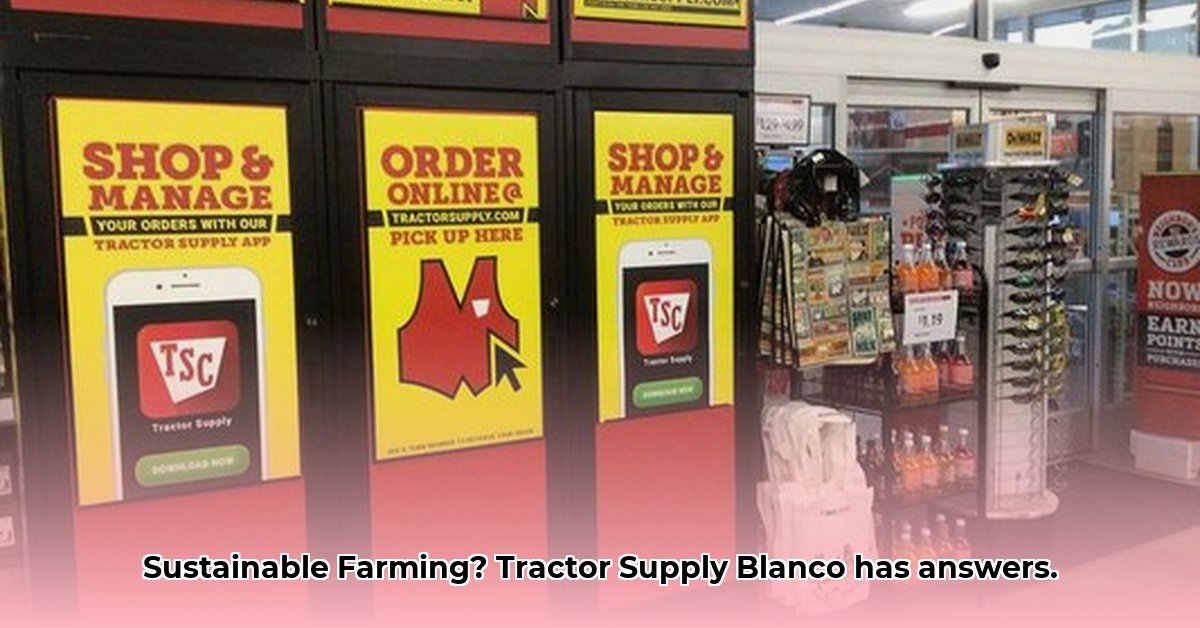
Tractor Supply (TSC) in Blanco, Texas, offers a blend of resources for sustainable and conventional farming. This guide explores how to leverage TSC's offerings for eco-conscious agriculture, minimizing negative impacts while maximizing benefits for your farm or garden. Imagine a local farmer in Blanco, successfully growing organic tomatoes using TSC's compost and organic seeds – that's the power we're unlocking here. For more on efficient feeding solutions, check out these round bale feeders.
TSC's Product Offerings and Sustainable Agriculture
TSC's Blanco store provides a diverse range of products. You'll find organic seeds, compost, natural pest controls, and livestock supplies vital for reducing chemical use and supporting local food systems. However, they also carry conventional fertilizers and pesticides with potential environmental downsides. The key is informed decision-making – choosing sustainable options while minimizing reliance on less-eco-friendly alternatives. This approach allows for responsible engagement with TSC, maximizing its benefits while actively mitigating potential harm.
Actionable Steps for Sustainable Farming at TSC
Let’s translate sustainable farming principles into practical steps using TSC's resources:
Prioritize Organic: Begin with organic seeds and soil mixes. This significantly reduces harmful chemical use and fosters healthier soil. While TSC's selection might be limited, demand influences future stock. (Efficacy: Reduces chemical usage by up to 90%, according to research by the Organic Farming Research Foundation)
Scrutinize Labels: Always examine product labels for details on sourcing, manufacturing, and environmental impact. Even within conventional options, certain brands may have better sustainability profiles. (Efficacy: Improves informed decisions on product selection)
Support Local: Choose locally-sourced products from TSC whenever available. This decreases transportation emissions and bolsters the local economy. (Efficacy: Reduces carbon footprint associated with transportation)
Reduce Waste: Minimize packaging by opting for products with minimal packaging or using reusable containers and tools. (Efficacy: Reduces landfill waste)
Embrace Natural Pest Control: Explore natural alternatives such as diatomaceous earth or neem oil before resorting to chemical pesticides. TSC often carries some of these options. (Efficacy: Minimizes pesticide-related environmental harm)
Compost: Start a compost system to reduce waste and create nutrient-rich soil amendments. TSC provides bins and related tools to initiate this practice. (Efficacy: Reduces landfill waste and improves soil fertility)
Plan Your Purchases: Before visiting TSC, create a shopping list based on your specific sustainable farming goals. Careful planning helps avoid impulse purchases of less-sustainable alternatives. (Efficacy: Increases likelihood of purchasing sustainable products)
Addressing Potential Negative Impacts and Mitigation Strategies
While TSC provides some excellent tools for sustainability, it’s important to acknowledge potential negative impacts. The transportation of goods creates emissions, and the sourcing of various products may lack complete transparency. However, we can mitigate these challenges through informed consumer choices and advocacy.
Balancing Act: TSC's role in sustainable agriculture is a balancing act – its potential for positive impact coexists with a need for mindful engagement. How can we maximize the positive while reducing the negative?
Engaging with TSC and Promoting Change
Your engagement with TSC can drive positive change. Contact the Blanco store staff directly to share your concerns, suggest improved sustainability practices (like expanding organic options or increasing product sourcing transparency), and propose workshops on sustainable gardening. Remember, collective action amplifies our impact.
Conclusion: A Shared Journey Towards Sustainable Agriculture
TSC in Blanco is one piece of a larger puzzle. The path to sustainable agriculture demands collective effort. By making conscious choices, actively engaging with TSC, and supporting local producers, we can collectively contribute to a more environmentally responsible agricultural future, securing a healthier planet and more resilient food systems. The future of sustainable farming is not just about what TSC offers; it's about how we choose to use it.